
Rising damp
treatment in Kent.
Groundwater drawn up through the wall because the damp proof course has failed, been bridged, or was never there. It's also the most over-diagnosed problem in the trade — so we check before we inject.
Water climbing the wall, not falling down it.
Brick and mortar are porous. Left to themselves they'll wick moisture up out of the ground like a sugar cube in tea, which is why buildings have a damp proof course — a physical barrier near the base of the wall that stops the climb. When that barrier fails, water rises until gravity and evaporation balance out, usually somewhere around a metre.
It carries ground salts with it. Those salts stay in the plaster once the water evaporates, and because they're hygroscopic they pull moisture out of the air on their own. That's why a wall can stay damp-looking long after the water stops rising, and why replastering is part of the fix rather than an optional extra.
The tell is the tide mark: a horizontal band with a rough, salty edge above it, sitting low on the wall and present whatever the weather has been doing.
Signs it's rising damp
- A tide mark roughly half a metre to a metre up the wall
- White fluffy salt deposits along the top edge of the stain
- Plaster blown, bubbling or crumbling low down
- Skirting boards soft, or paint lifting at the bottom
- It's there in dry weather as well as wet
- Worse on ground floor walls only, never upstairs
If it's upstairs, or it comes and goes with the rain, it isn't rising damp — and a damp course won't help you.
Rising damp injected and replastered
A Kent solid wall taken back to the brick, injected with a new damp proof course, then replastered with a salt-inhibiting render. Drag the line across to see it.
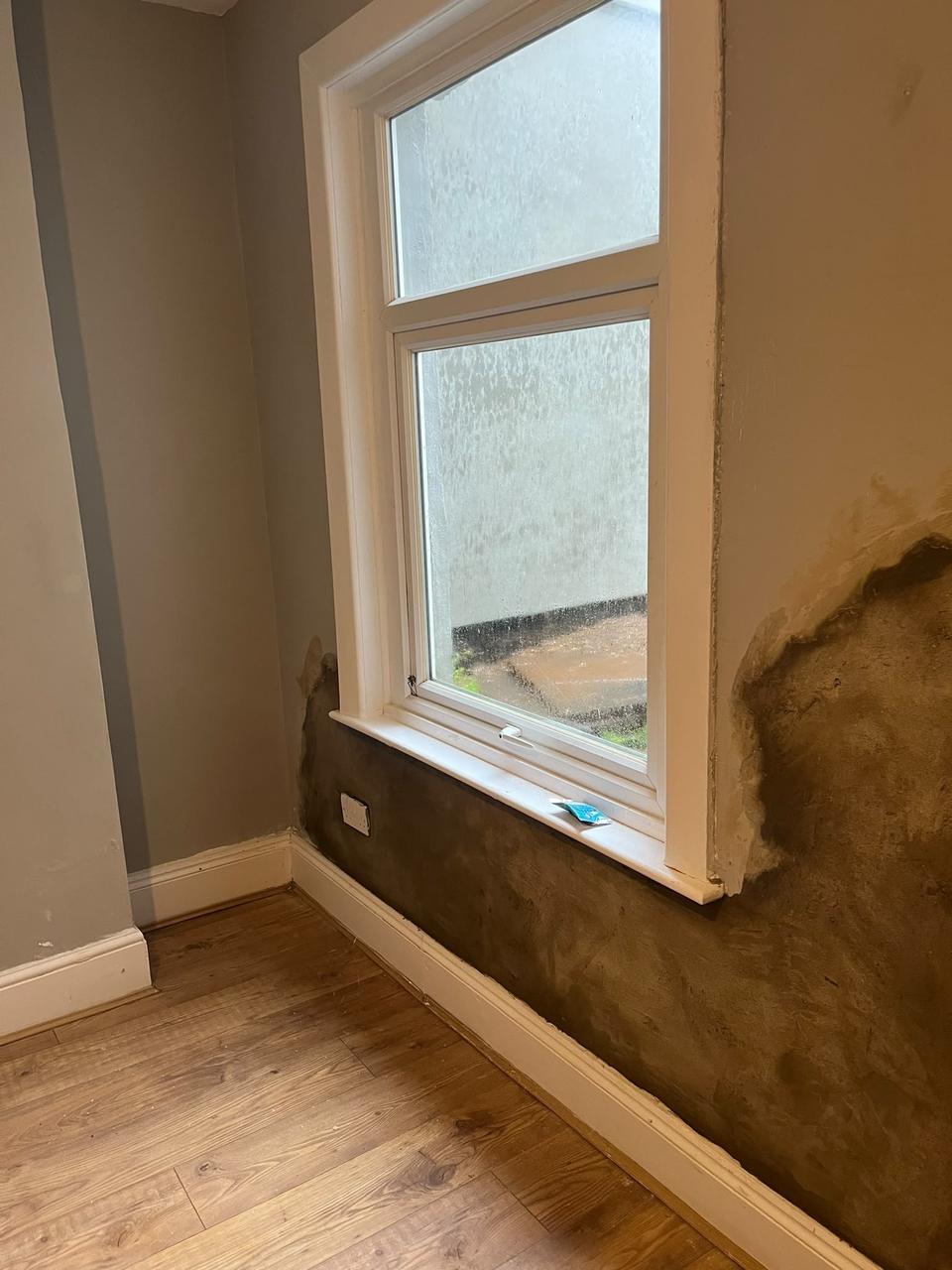
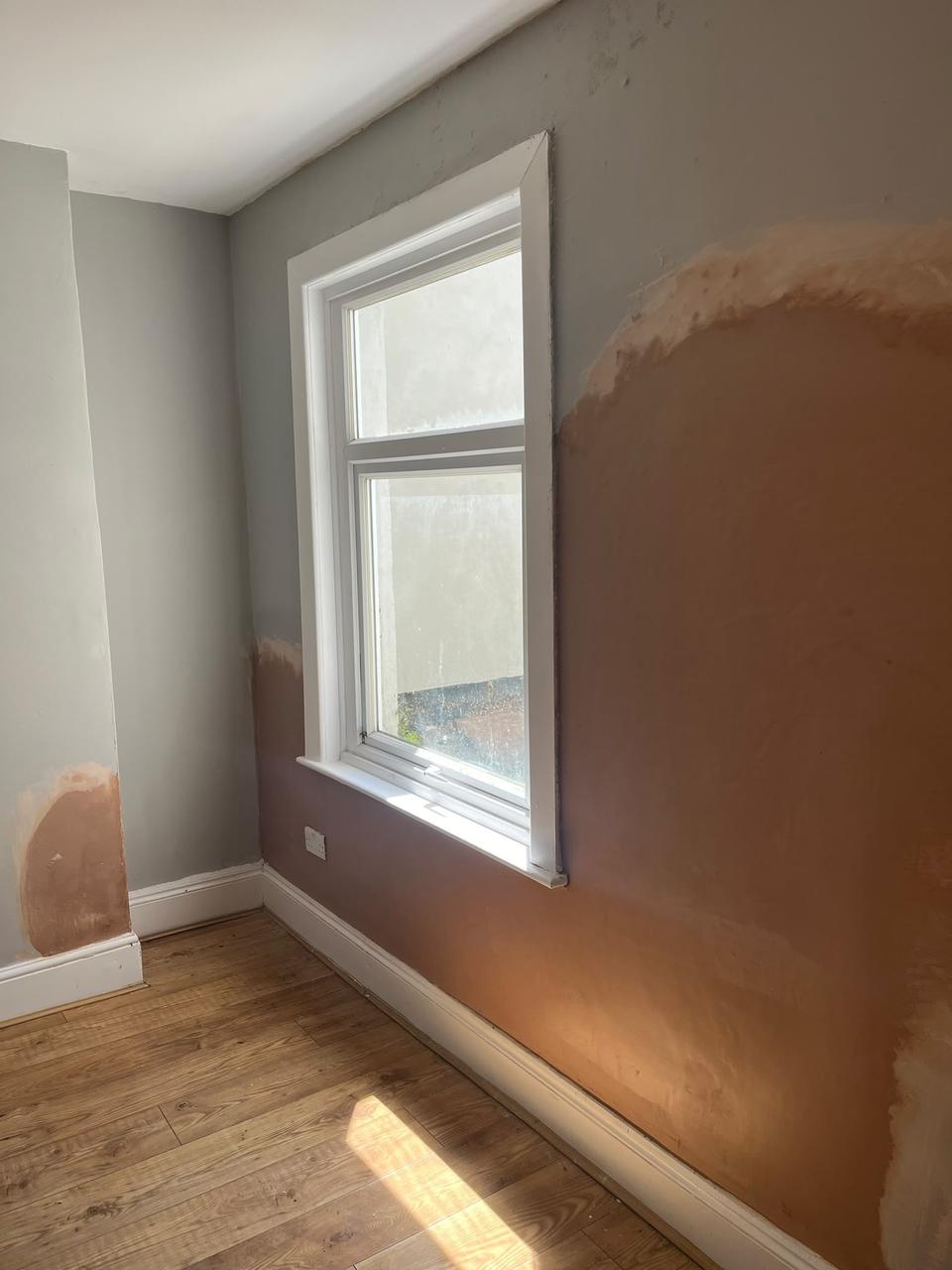 BeforeAfter
We rule things out before we rule them in.
Plenty of walls have been injected when the actual problem was a raised patio or an overflowing gutter. Injecting those walls achieves nothing except a bill.
So the survey looks outside before it looks inside.
- 01
Check outside first
External ground levels, paths, patios and flower beds. If the ground has crept above the internal floor, the damp course is bridged and no amount of injecting will help.
- 02
Meter and inspect
Readings across the affected wall and the ones either side, plus a look at the plaster condition and the height and shape of the staining.
- 03
Written findings
What we found and what's causing it. If the answer is to drop a patio rather than inject a wall, that's what we'll tell you.
- 04
Inject the DPC
Holes drilled at mortar-course level, SecoMUR cream injected, spreading through the masonry to form a continuous barrier.
- 05
Replaster and hand over
Salt-contaminated plaster off, salt-inhibiting render on, skimmed ready to decorate. Guarantee paperwork on completion.
Think you've got rising damp?
Send a photo of the wall. We'll tell you whether it looks like rising damp or something cheaper to fix.