
Exterior wall
coatings in Kent.
A flexible, breathable finish over the whole elevation. It bridges hairline cracks, sheds rainwater, lets the wall breathe — and makes a tired house look after itself again.
Two jobs at once: weatherproof and presentable.
Render cracks. It's what render does — buildings move, temperatures swing, and hairline cracking appears across an elevation over a couple of decades. Each crack is a route for rainwater to get behind the render, where it can't easily evaporate back out.
A flexible coating is applied over the existing render and moves with the building rather than cracking alongside it. It bridges those hairline cracks, sheds water off the surface, and — critically — stays vapour-permeable so moisture already in the wall can still escape.
That last point matters. Sealing a wall completely with the wrong product traps moisture inside it and makes damp worse rather than better.
When a wall is ready for it
- Hairline cracking across the render
- Green or black algae staining down the elevation
- Paint flaking or blistering off the outside wall
- Damp patches inside that worsen after rain
- Render that has been patched in several colours
- A house that simply looks tired from the road
Blown or hollow render has to come off and be made good first — coating over loose render just fails with it.
Full elevations, not patches
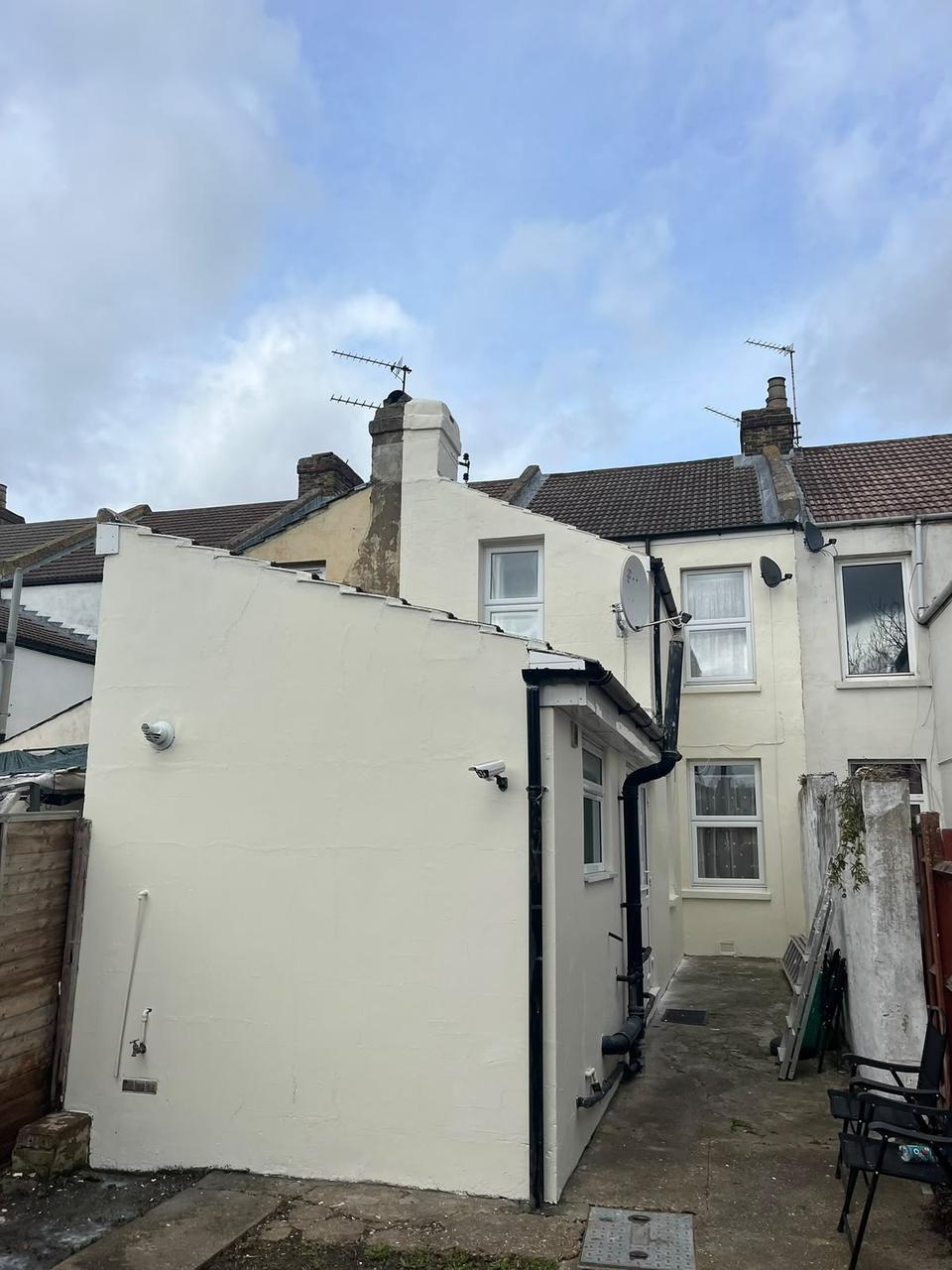
A side wall with widespread cracking, repaired and coated. We coat whole elevations so you don't end up looking at a visible repair for the next fifteen years.
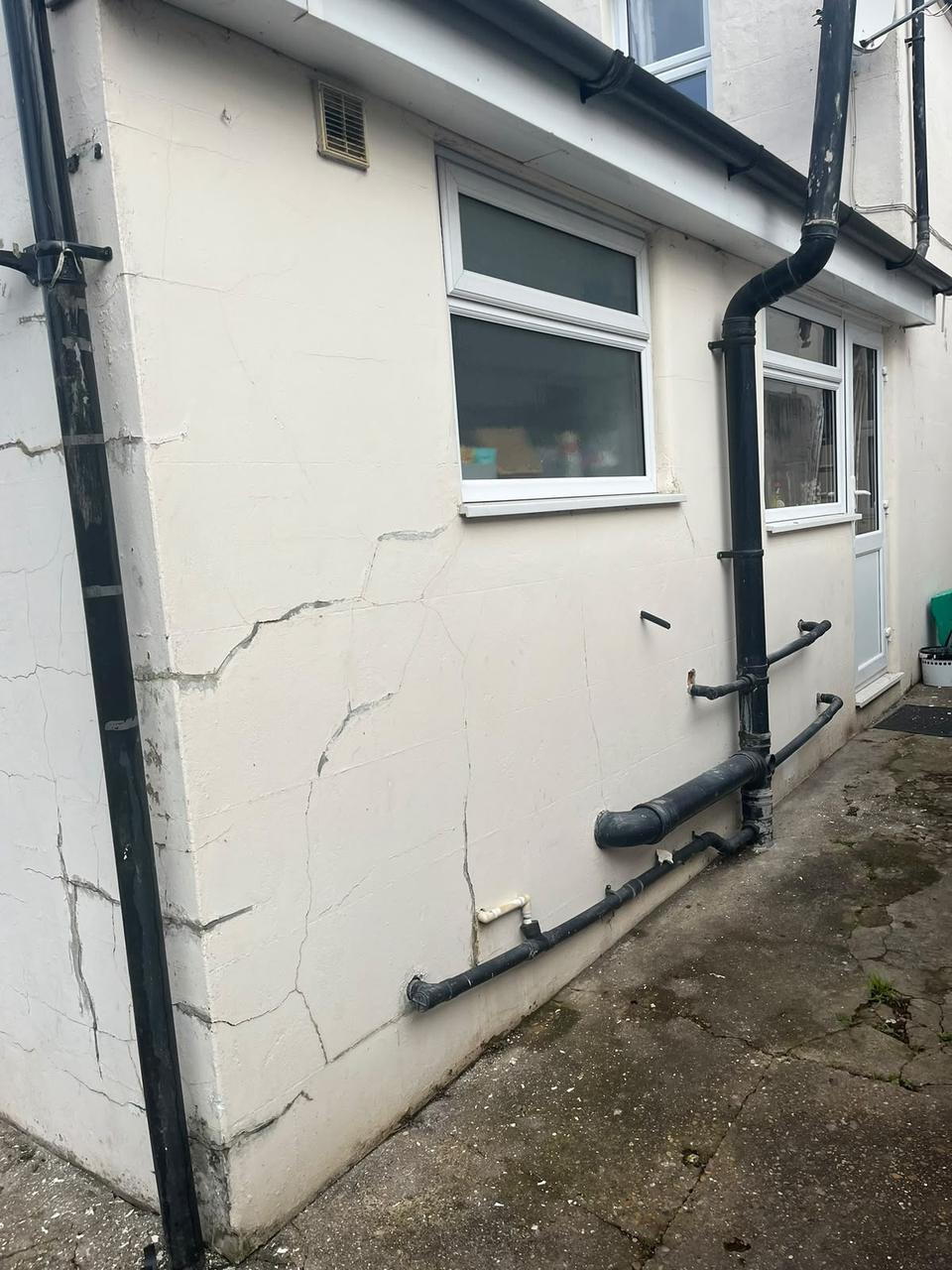
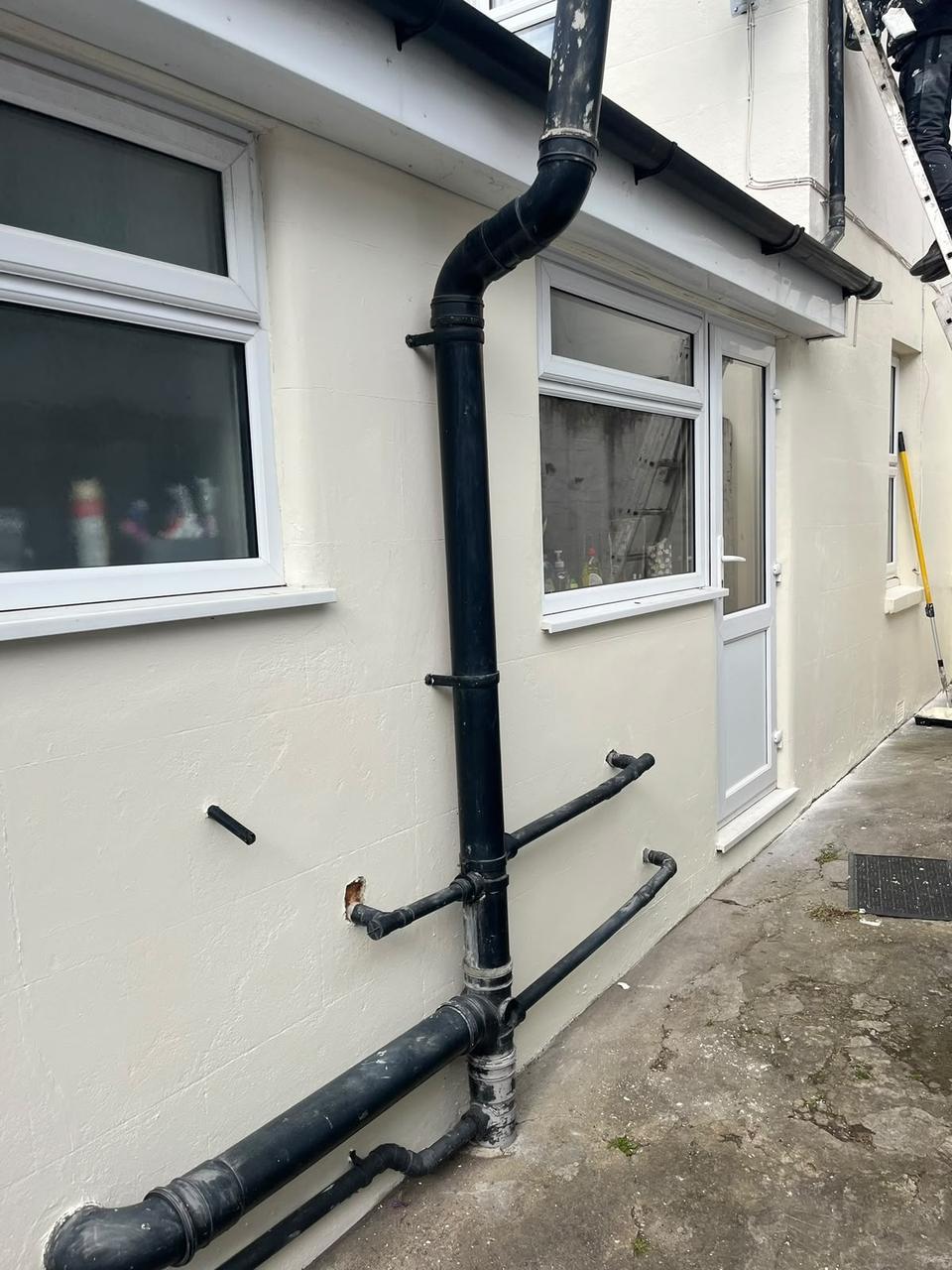 BeforeAfter
Preparation is most of the job.
The coating itself goes on quickly. What determines whether it lasts fifteen years or two is everything that happens before it.
So we don't coat over anything loose, damp or moving.
- 01
Survey the elevations
Which walls, what condition, what access. Anything above single storey needs scaffold, and that's in the quote rather than added later.
- 02
Repair and make good
Cracks cut out and filled, blown render removed and re-rendered, and any gutter or flashing issue sorted first.
- 03
Clean down
Algae, dirt and loose material washed off so the coating bonds to sound material.
- 04
Mask and protect
Windows, doors, paths and planting sheeted before anything is applied.
- 05
Apply and inspect
Coats applied to the specified thickness across the full elevation, then walked round with you before the scaffold comes down.
Send us a photo of the elevation.
A wide shot plus a close-up of the worst area is usually enough for us to tell you what's involved.